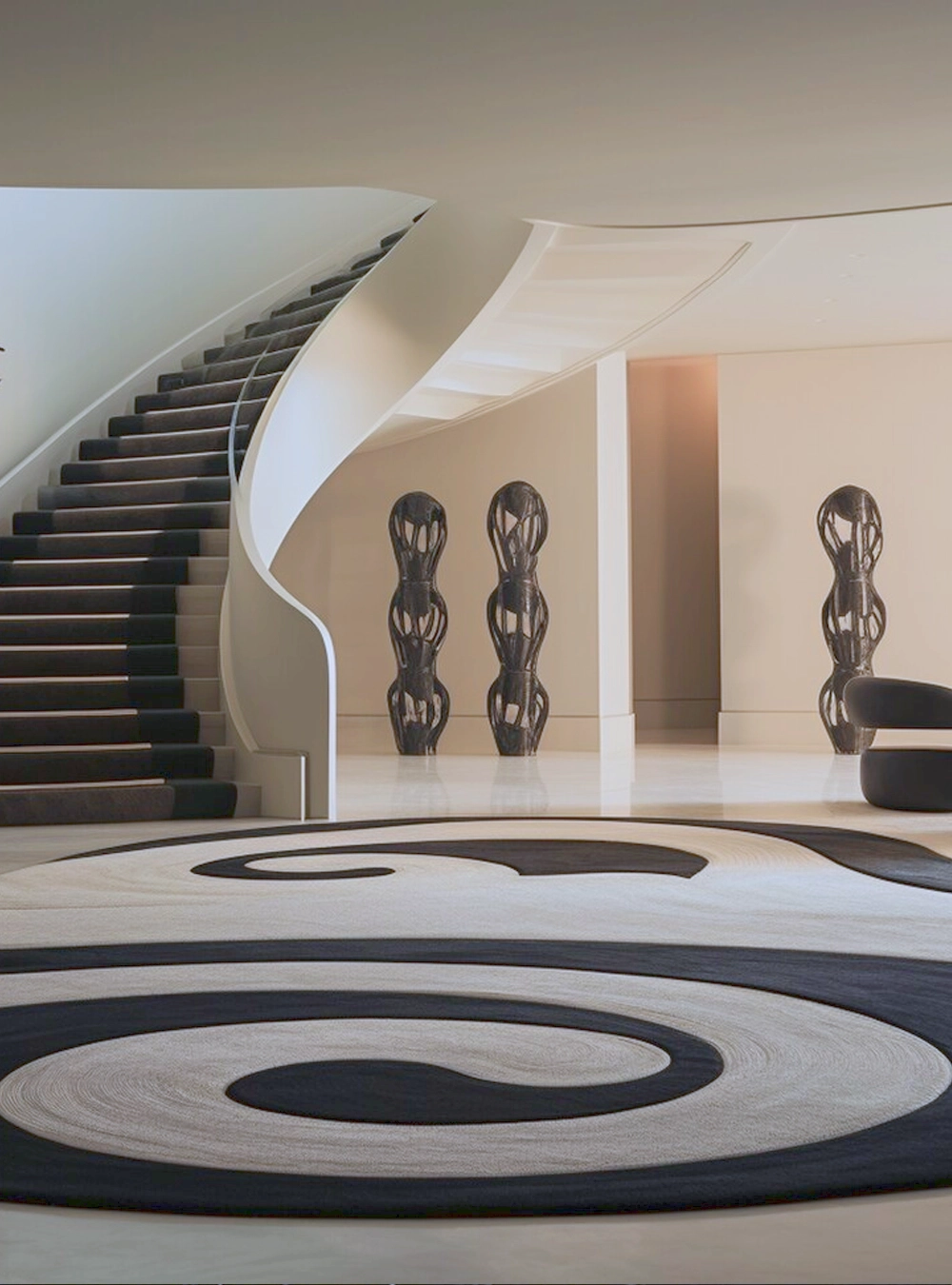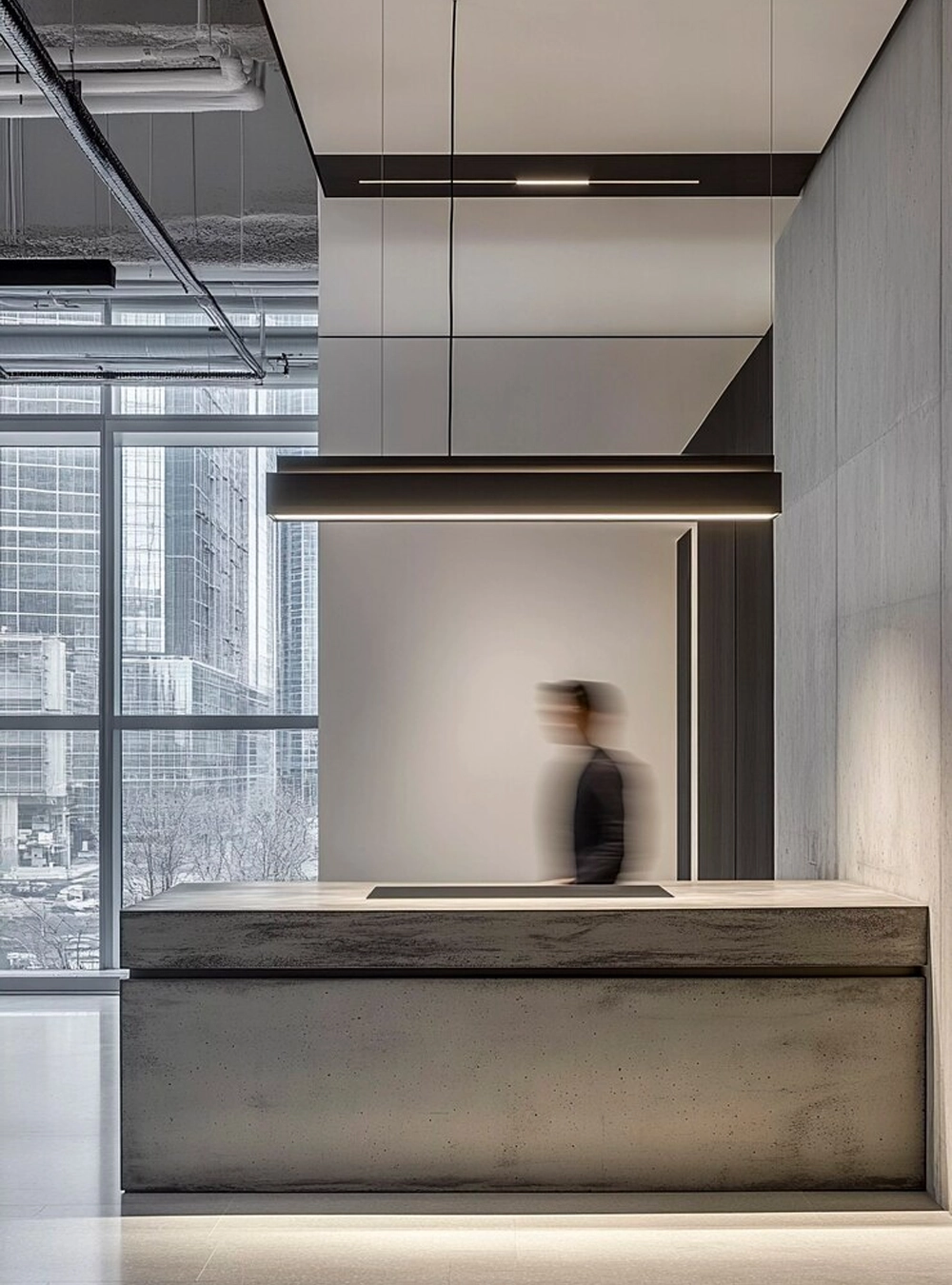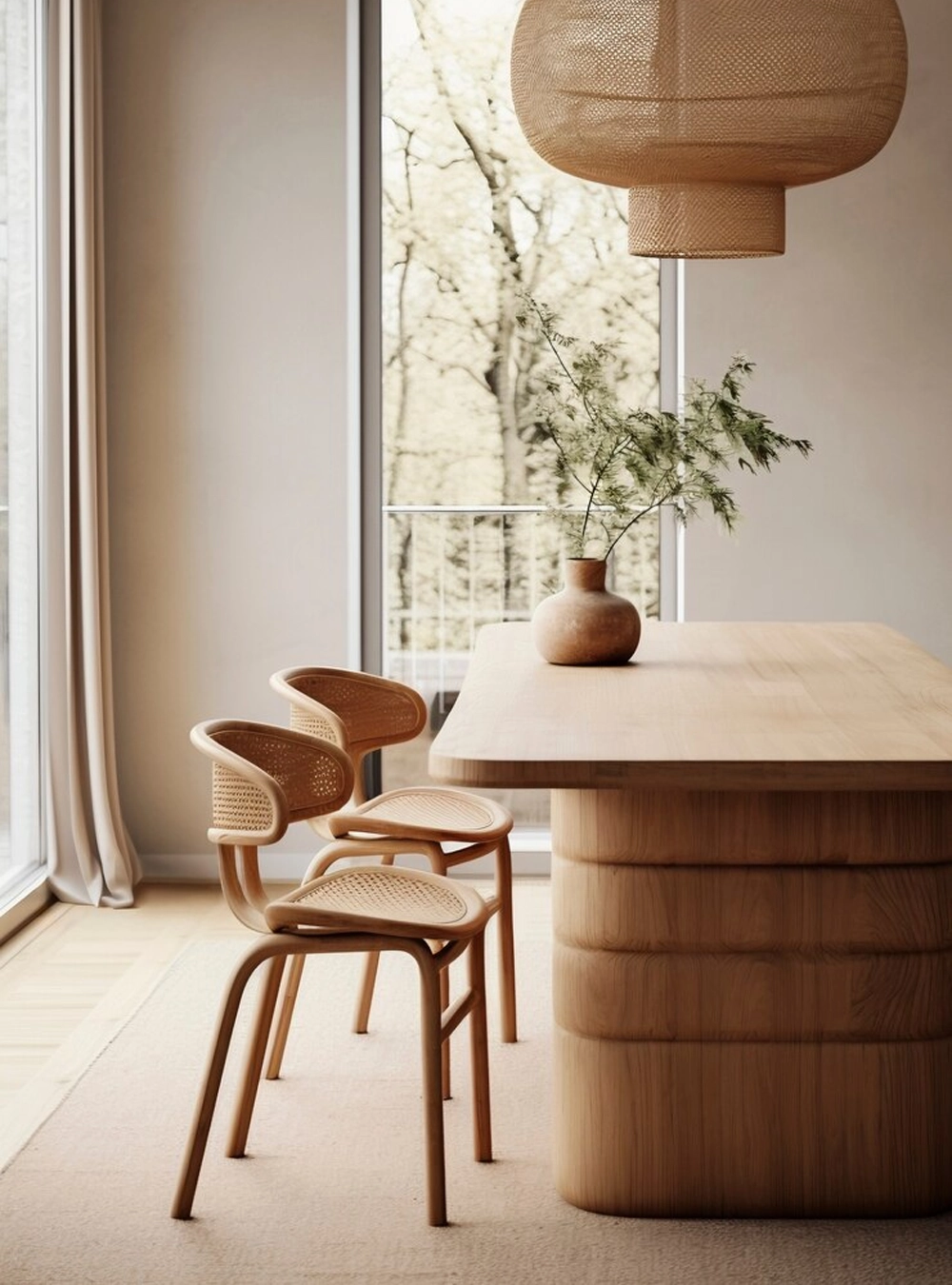
Colour is what people notice first and forget fastest. Material is what they feel every day for the next decade — underfoot, under a hand on a worktop, in the way a room sounds when it is full. Choosing interior design materials well is less about taste than about being honest concerning how a surface will be treated and how it will look after that treatment.
Ask three questions of every surface
Before we specify anything, we ask the same three things:
- What will touch it? Hot pans, wet feet, dog claws, chair legs, sunscreen, red wine. Be specific and be pessimistic.
- How will it age? Every material changes. The question is whether it improves — brass darkening, oak deepening, leather softening — or simply degrades.
- Who maintains it, and honestly how often? A surface that needs sealing twice a year is a fine choice for someone who will do it, and a bad one for everyone else.
Where each material earns its place
Natural stone
Marble is beautiful and it will etch. That is not a defect; it is what marble does when acid touches it. Specified on an island in a family kitchen, it will be marked within a month. Specified on a bathroom vanity or a fireplace surround, it stays glorious for decades. Granite and quartzite handle abuse far better if you want stone where cooking happens.
Engineered quartz and sintered stone
Consistent, non-porous and forgiving — the sensible default for hard-working worktops. Sintered surfaces additionally shrug off heat and UV, which makes them the honest answer for an outdoor kitchen or a sun-flooded island.
Timber
Nothing warms a room like real wood, and nothing else improves so visibly with age. Engineered boards with a thick wear layer are more stable than solid across the temperature swings of an Indian year, and can be sanded back more than once. Oiled finishes can be repaired in patches; lacquered ones cannot, and must be redone wholesale.
Laminate and veneer
Modern laminates have stopped apologising. On wardrobe interiors, utility runs and children's rooms they are the rational choice — cheaper, tougher, and now convincing at arm's length. We spend the saved budget where hands actually land: the handle, the worktop, the door you touch every day.
Tile
Large-format porcelain has quietly become the most versatile material available: it takes wet, heat and traffic, and comes in finishes that read convincingly as stone or concrete. Watch the slip rating in bathrooms — R10 or better anywhere feet will be wet — and remember that grout colour is a design decision, not an afterthought.
Build a palette, not a collection
A room needs fewer materials than people expect. Our working structure:
- One hero — the surface the eye lands on. The stone, the timber floor, the feature wall.
- Two supports — quieter materials that let the hero speak.
- One accent — a metal, a leather, a bold tile. Small in area, decisive in effect.
Then vary texture rather than colour. Three surfaces in the same warm neutral but in matt, honed and woven finishes will read as rich and deliberate. Three different colours at the same sheen will read as noise.
Do not forget the acoustics
A room finished entirely in hard surfaces looks superb in photographs and is exhausting to sit in. Something soft has to absorb sound — a rug, curtains, an upholstered headboard, an acoustic panel behind art. This is the single most common omission in otherwise excellent schemes.
The samples test
Never approve a material from a screen or a showroom. Get physical samples, as large as you can, and put them in the actual room. Then:
- Look at them in morning, afternoon and artificial light. Undertones shift dramatically, and a warm white under a showroom halogen can turn distinctly pink at home.
- Lay them in the orientation they will be used — flooring on the floor, worktop horizontal. Light behaves differently on a vertical sample.
- Abuse an offcut. Spill oil, lemon and coffee on a worktop sample. Leave it overnight. Better to learn now.
- Check adjacent samples together, not one at a time. Materials are only ever seen next to each other.
Spend where it shows and where it suffers
The two places worth the money are the surfaces you touch constantly and the ones that take the most punishment — often the same list. Kitchen worktop, sanitaryware, door handles, the flooring in the main routes. Cabinet carcasses, wardrobe interiors, spare-room finishes: buy sensibly and move on.
A material chosen once and chosen well is cheaper across ten years than one replaced twice. That is the whole argument.
Working out a palette for your project? Bring us the plan and we will walk through the options with real samples.